
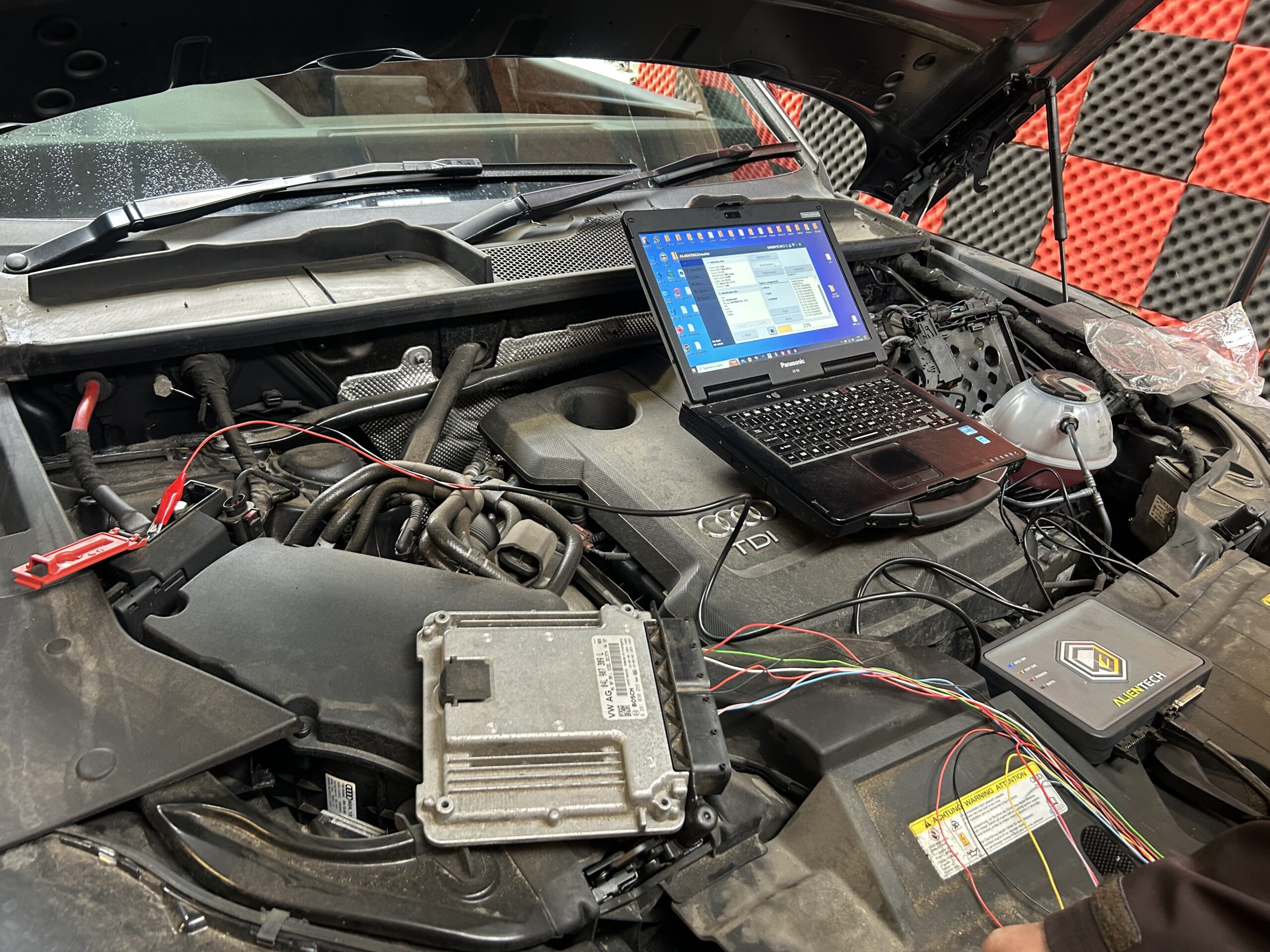
When to Reprogram Your Car ECU
Your vehicle’s Engine Control Unit, commonly called the ECU, is an electronic control module that helps manage important engine functions. Modern vehicles use electronic systems to monitor and coordinate components such as fuel delivery, ignition, emissions, sensors and other operating systems.
ECU reprogramming, also called ECU coding, programming or software updating, may be required in specific situations. However, it is not a general solution for every warning light, starting problem or poor-performance complaint. A proper diagnostic assessment should always come first.
What Is ECU Reprogramming?
ECU reprogramming involves installing, updating or configuring approved software and settings within the vehicle’s electronic control system. The correct procedure depends on the vehicle make, model, year, engine type and the reason the work is required.
It should be performed with suitable professional diagnostic equipment, stable power support and the manufacturer-appropriate procedure. Incorrect programming can cause vehicle faults or leave the vehicle unable to operate correctly.
When ECU Reprogramming May Be Needed
After an ECU Replacement
If an ECU has been replaced due to a confirmed fault, the replacement unit may require coding, configuration or programming to communicate correctly with other vehicle systems. The exact requirements vary by vehicle.
When a Manufacturer Software Update Is Required
Some vehicles may have approved software updates that address known system concerns or improve the operation of a particular module. A qualified technician can check whether an appropriate update is available for your vehicle.
After Certain Electronic Component Replacements
In some cases, replacing a related control module, sensor, transmission component or other electronic part may require adaptation, coding or calibration. This is not the same for every vehicle, so professional diagnosis is important.
Following Confirmed Communication or Configuration Faults
Diagnostic testing may identify a control-module communication or configuration issue. If software or coding is confirmed as the cause, the technician can advise whether programming is appropriate.
Problems That Need Diagnosis First
Many common vehicle issues do not automatically mean that the ECU needs reprogramming. Warning lights, rough running, difficult starting, poor fuel economy or reduced performance can result from mechanical faults, wiring issues, weak batteries, damaged sensors, fuel-system problems or other causes.
Reprogramming an ECU without identifying the underlying issue can waste time and money. A diagnostic scan and physical inspection should be used to confirm the fault before any software work is recommended.
Why Professional ECU Programming Matters
ECU programming requires technical knowledge, compatible diagnostic tools and a stable electrical supply. An interruption during programming can cause serious electronic faults. For this reason, vehicle owners should avoid unverified software, unsuitable tuning files and inexperienced service providers.
A professional technician should explain the reason for programming, verify the vehicle details, assess stored fault codes and confirm the correct procedure before beginning work.
ECU Diagnostics and Programming in Accra, Ghana
DMT MATE Auto Diagnostics provides professional vehicle diagnostics, module scanning and ECU programming support for eligible vehicles in Accra, Ghana. We assess the fault first and recommend programming only where it is suitable for the vehicle’s confirmed needs.
Contact DMT MATE Auto Diagnostics with your vehicle make, model, year and the symptoms you are experiencing to arrange a professional assessment.